The user-side energy management system is an automated system that adjusts user-side loads and manages the charging/discharging of integrated energy storage devices to adapt to grid load fluctuations and electricity price changes. Its objectives include conserving energy, ensuring user-side power security, reducing electricity costs for users, and enhancing grid stability and safety. The central controller achieves optimized management of the entire system operation through data analysis and mining, providing energy-saving recommendations via optimization algorithms. For example, during peak grid load periods, priority power supply is allocated to devices with low energy consumption and high reliability requirements, while high-power devices like water heaters are activated during off-peak periods. Energy storage devices store electricity from solar, wind, or off-peak grid sources for use during outages to sustain normal production and daily life. These devices facilitate peak shaving and valley filling, stabilize power system operation, and improve energy utilization efficiency. With technical support, they can also feed electricity back to the grid, further enhancing peak shaving and valley filling effects.
RT-LAB is a novel model-based engineering design application platform. It enables engineers to implement comprehensive solutions for project design, real-time simulation, rapid control prototyping, and Hardware-in-the-Loop (HIL) testing within a single platform. RT-LAB applies to system simulation and control scenarios, including user-side energy management systems, allowing engineers to test and validate the EMS through RT-LAB.
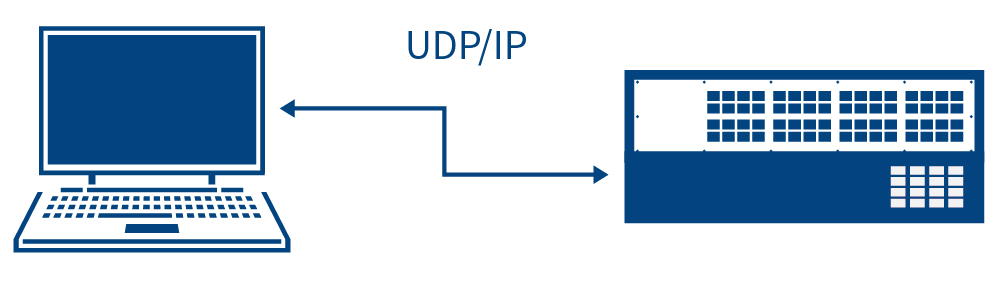
RT-LAB is a management software primarily composed of a PC and an OP5600, connected via an Ethernet cable. The PC, also known as the host computer (upper computer), functions to monitor and issue commands, while the OP5600, referred to as the target computer or lower computer, primarily executes programs. The host computer handles model editing and compilation, whereas the target computer is responsible for model execution and I/O operations

Fig. 1 Schematic diagram
The host computer is connected to the target computer via UDP/IP. The host computer is responsible for receiving and displaying data generated by the target computer's running programs, while it can control and manipulate the target computer by issuing commands.
It processes interactions among electrical load, electricity prices, and energy storage to provide users with energy-saving recommendations; enables flexible switching of various loads; and utilizes energy storage equipment to store electricity from solar and wind sources during off-peak hours. This stored energy maintains normal production and daily life during power outages while achieving peak shaving and valley filling functionality
This section explains how to apply the product. It can be divided into multiple scenarios for separate explanations.
Application Method A
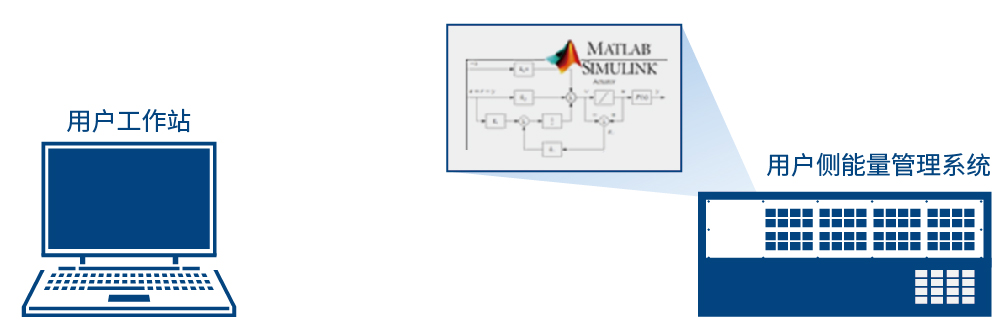
It is primarily divided into two parts: the PC and the simulation machine. Through MATLAB programming, the user-side energy management system and its control strategy models are built. Pure digital simulation is used to test the stability of the entire system and whether the control strategies meet the requirements.

Fig. 2 Schematic diagram
Application Method B
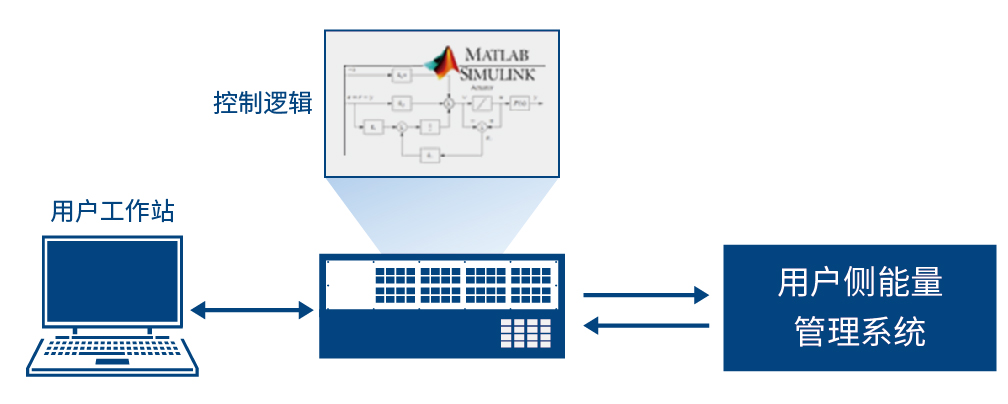
The system is primarily divided into three components: the PC, the real-time simulator, and the user-side management system. The control strategy for the user-side energy management system is programmed in MATLAB and downloaded to the lower-level controller. It is then connected to the user-side load for hardware-in-the-loop (HIL) simulation, validating the effectiveness of the control strategy.

Fig. 3 Schematic diagram